Helping Your Boyfriend is short. The English script runs to more than 8,000 words, it was built in Unity with Naninovel, and it came out of the Spooktober 8th Annual Visual Novel Jam in 2026. You can finish it in one sitting. What it will not do is explain anything to you.
There is no flashback explaining why a respectable pathologist keeps a locked room, and not one monologue where Adrian confesses what he is. The game works by accumulation instead of exposition: it shows you a smiling doctor, then the same smile three pages later when the question has changed, and trusts you to notice that nothing moved.
So the most interesting facts about this cast are not in what they tell you but in what they do with their hands. Adrian hands you a job, a pill and a key. Ian climbs over a fence. Oliver waits in an alley for nights on end. Madison carries a bear called Macaroni everywhere.
Spoilers for the entire game
This page names the twist in Ian's route, explains what the endings reveal about Adrian, describes the attack sequence and the escape, and discusses the family photo. Finish your own run first.
A game that refuses to explain
Every scene ends with a label instead of an explanation. The first midnight gives you #OpenEyes, #Take, #Refuse and #Vanish, and then moves on. The horror is not that the game hides things from you. It is that it puts them in plain sight and lets a pleasant surface make you look away. Adrian is warm, and he is also keeping something in a room he told you not to enter. Ian is a predator, and he also wants a flower shop.
This guide gives you the cast, with what the script establishes and where it stops, and then tells the whole story back to you in order.
The cast at a glance
Five named people carry this story, and only two of them are in the house with you for most of it.
| Character | Who they are | The detail that defines them |
|---|---|---|
| You | The protagonist, Adrian's lover | Your name, pronouns and body type are chosen at the start and threaded through every line |
| Adrian Winchester | Your boyfriend, Head of Diagnostic Pathology at Valleybrook Hospital, aged 30 | A respected doctor, an award winner, still a bachelor, always smiling |
| Ian | The stranger at the bedside, introduced as ??? | Adrian's younger brother, and the one dream of his that survives intact |
| Oliver Freeman | The voice on the phone | An officer of the law who had Adrian under surveillance in the alley |
| Madison | An orphan Adrian talks about | She named the teddy bear Adrian made for her Macaroni, and she carries it everywhere |
You — the one who cannot walk
You begin by choosing yourself. At the start you pick a first name, a last name, your pronouns from a set of neutral, feminine and masculine options, and a body type, and the game threads those words through every line afterwards. It is not a cosmetic menu — the person in this story is whoever you decided to be.
Then it gives you the condition that defines your entire relationship with the house. A leg illness left you unable to walk, so you moved in with Adrian, and your sleep schedule inverted, so you wake late at night, right when Adrian gets home from work.
Every later scene is built on that structure. You are bedridden in a house where a doctor lives, and awake exactly when the house is quietest. You cannot walk to the door or get up to check a sound. Adrian is the only one who can move freely through the house, and you are the only one awake to hear him move through it.
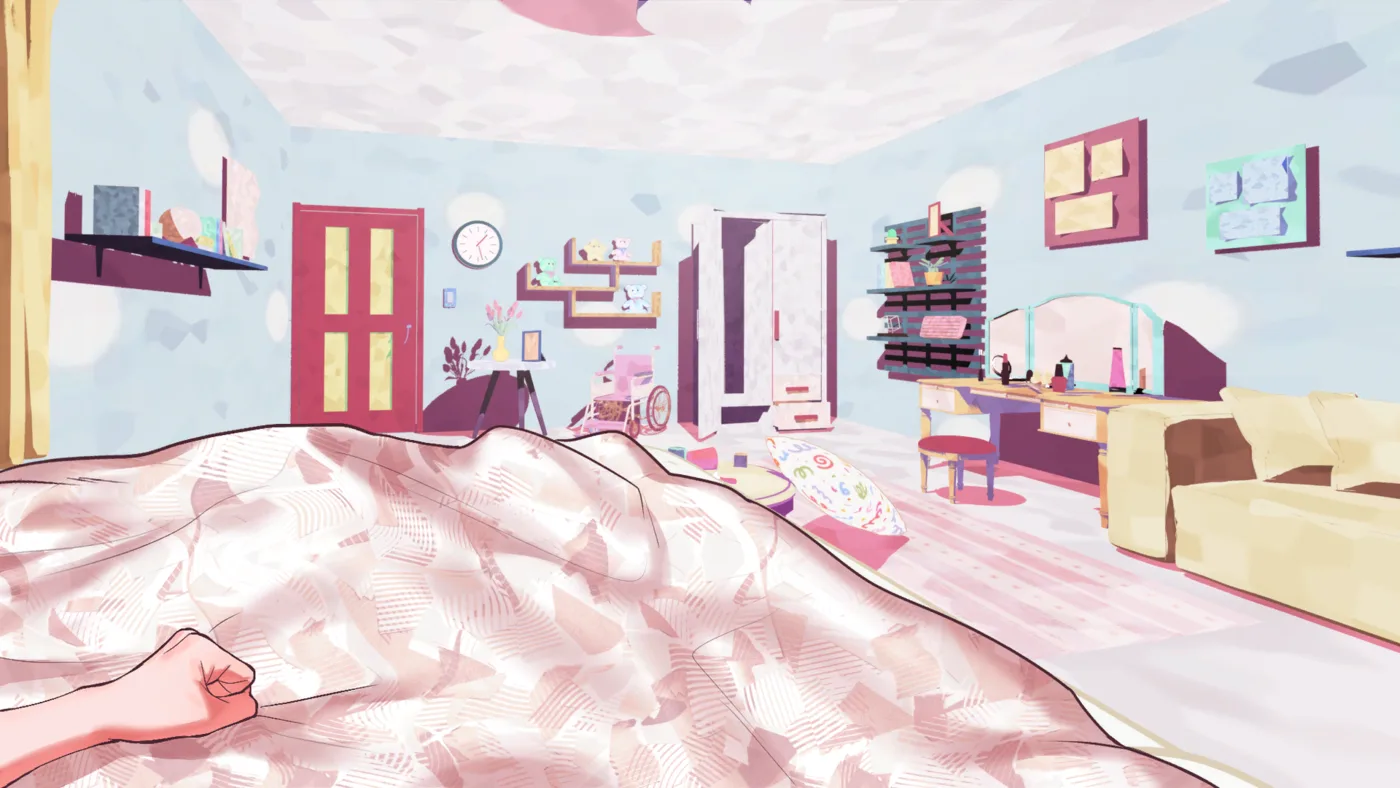
The wheelchair is in that room, and you never use it. Every door in the house is something that happens to you rather than something you walk through, and the only way you ever leave is when somebody opens one for you.
Adrian Winchester — the smile
Adrian Winchester is your boyfriend. He is 30 and Head of Diagnostic Pathology at Valleybrook Hospital. Publicly he is a respected doctor and a public award winner, and he is still a bachelor. He is blonde, he has red eyes, and he is always smiling.
On the page that introduces him, that smile is already doing something slightly wrong. The opening illustration wraps him in pink hearts and three laughing girls — but he is a pathologist, he is the one holding the knife, and the game hangs that grin over the first mention of the teratoma he cut open at work.

Here is the central horror device, stated as plainly as the game allows: his smile is identical on the pages that introduce him and on the pages where the question changes. Nothing in the artwork shifts, nothing in his posture shifts, nothing in his voice shifts. The game never gives you a beat where Adrian lets the mask slip. What changes is the camera, not the man.
Everything Adrian does after dark belongs to the same category. The doll job, the basement, the locked room, the photographs in the secret room — all his. He gives you work, medication and rules about the stairs, and never once lies to you in a way you can point at. He simply never tells you the whole sentence.
Ian — the copy of his brother
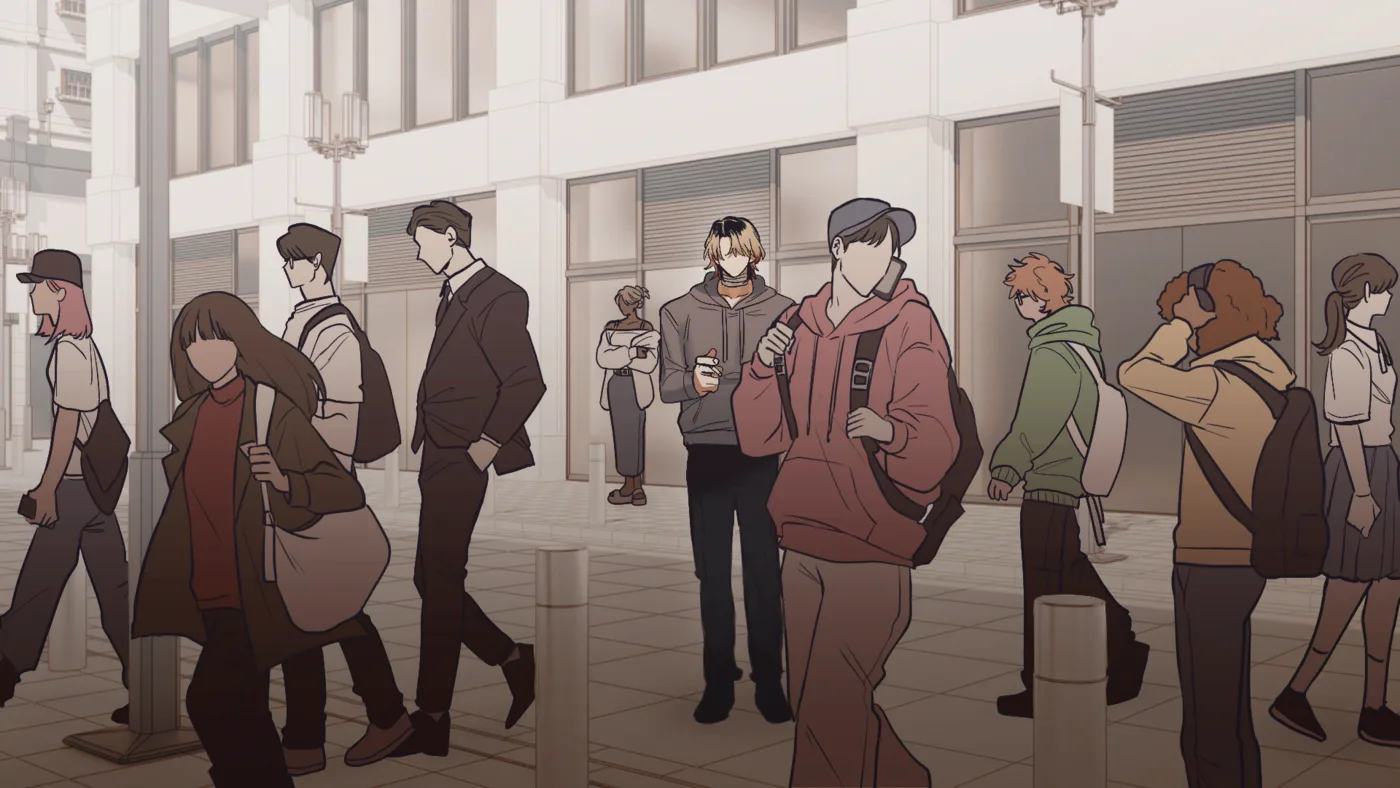
Ian arrives as ???. The game does not give you his name until it has already used him, and the reveal is structural rather than a line of dialogue: the man in the hospital-patterned shirt who pins you down in the dark and holds a pill in front of your face is Adrian's younger brother.
He gives you his own account of that relationship, and it is not a happy one. He says Adrian never wanted him. He says he is so weak he might drop dead any day. He says Adrian did not even see him as anything but a child. He tells you his dream is to open a flower shop. He alternates between mocking you and genuinely shaken, and the alternation is the point: you cannot get a clean read on him because he is running two performances at once.
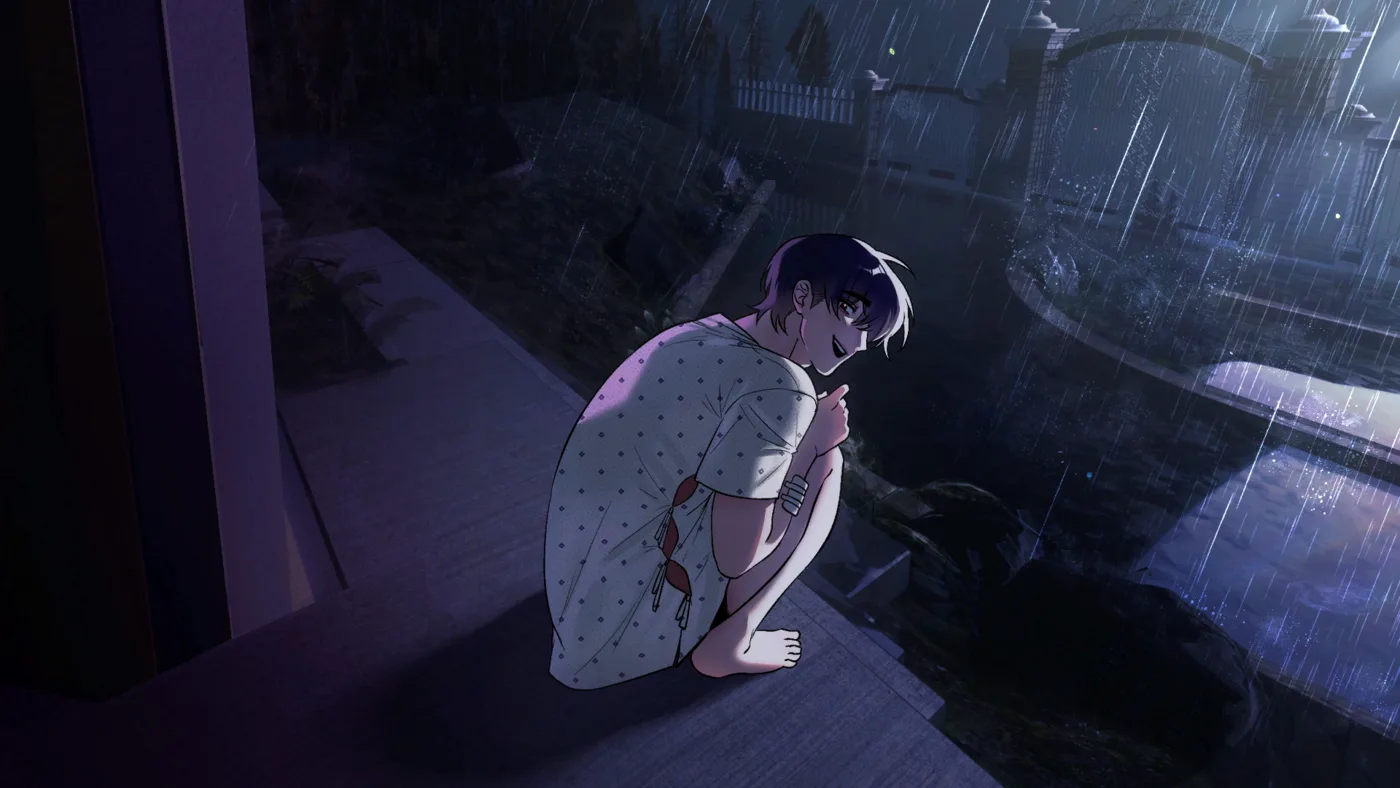
Then the Ian route turns the whole thing over. He admits that it was all a lie, and that he is no different from Adrian. He wanted to give the prey some hope, gain their trust, and then stab them in the back — because he was copying his brother the whole time.
But there is an honest paradox buried in that confession. The flower-shop dream is the one part of him that turns out not to be a lie. Every piece of sympathy he offered was a technique, and the thing he wants for himself was real. A man who learned cruelty from his brother still wants, in some quiet corner of his life, to grow flowers and sell them. It is the crack in the performance, and the story never closes it.
Structurally, Ian's affection meter is the only one with an ending threshold: ianRelation > 14 opens IanRoute1, with its own #FreeTime and #FlowerShop branches, and ianRelation >= 40 opens IanRoute2, the only route that reaches Ending 04.
Oliver Freeman — the voice
Oliver Freeman is the voice on the phone. He opens with "Hello, Oliver Freeman speaking, may I know who this is?" — the flat, professional register of somebody who has answered a strange number and is not yet sure whether to be helpful or procedural.
Then he becomes a body. When Ian raises a syringe in the rain, Oliver is the one who stops it. He climbed over the fence just in time, and he says he is an officer of the law. The reveal of how he got there is the reveal of what he was doing the whole time: he had been parked in the alley by Adrian's house, patrolling day and night because he suspected Adrian. Without that call you never got out of the house at all.
Which reframes the escape. You were being watched before you knew you were being watched, by somebody who had already done the work of suspecting the man you live with and simply had not yet had a reason to come to the door. Oliver is the third person circling the house before you arrived, and the only one whose circling was on your side.
His phone is also the most mechanically demanding object in the game. Two digits of a phone number are written in ink on your arm and fade over time, but you remember two of them, and you need them to dial Oliver. The screen branches four ways — phoneTried, phoneCorrect, phoneLeave and oliverCallDropped.
Madison — the reason for the dolls
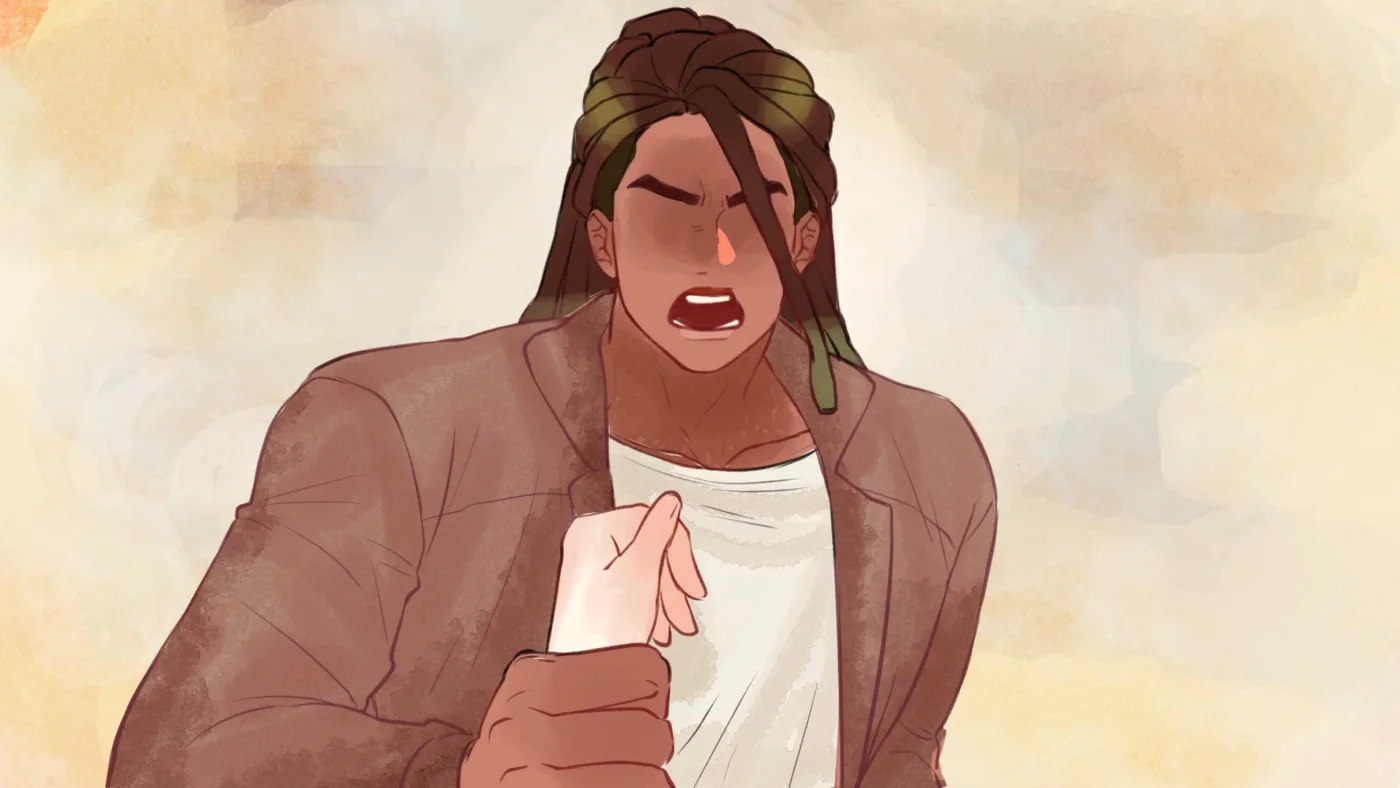
Madison is the most important person in the game who never appears in it. She is an orphan Adrian talks about, abandoned at an orphanage at two, and she struggles to talk with the other children.
She named the teddy bear Adrian made for her Macaroni, and she carries it everywhere. A child who was left at two and cannot easily speak to the other children in the orphanage was given a bear by this doctor, named it something silly and warm, and never let go of it.
Here is why that matters mechanically. The doll job Adrian gives you is framed as work — take old dolls apart, piece by piece, into the bins, and the teddy bear on the table is the first one. The teddy bear Adrian made for Madison is called Macaroni. The game never says in as many words that the first doll on the table is the bear called Macaroni, and this guide will not pretend it does. But the placement is not accidental: the first object you are asked to pull apart is a bear that a traumatised little girl named, and Adrian is the man who made it. Madison is the emotional anchor of the doll job and the first hint that the dolls have a purpose beyond Adrian's convenience.
Adrian is a man who makes things for children and then takes them apart. The game does not make that sentence explicit. It just puts the bear first, then hands you a job at a table, and then a stranger arrives and holds out a pill.
The whole story, in order
Here is the plot as it actually plays, in the order the script runs it. Read this once and the branching stops feeling random.
The prologue
The prologue introduces the player character with the customisable name, pronouns and body type, and establishes the situation: a leg illness has left you unable to walk, so you live with Adrian, and your sleep schedule has inverted so that you wake late at night, right when he comes home from work.
Day 1 — 21 June, 08:12 PM
Adrian comes home from work. You talk. You take apart a doll, and the teddy bear on the table is the first one. He tells you about the teratoma he cut open at work, and brings home a green dinosaur doll and asks you to name it: O'Green, Jeff the dark-lord of the darkness realm, Diny the bed-watcher, or Bob. That choice is one of the few genuinely free selections in the game.
The first midnight
A weight settles on you in the dark. A man's shadow falls over the bed. A hand clamps over your mouth and a pill is held in front of your face. The four labels are #OpenEyes, #Take, #Refuse and #Vanish. Swallowing it sets tookPill. The scene never tells you what the pill does, or who is leaning over you.
Day 2
The routine continues, and the routine is where the exploration happens. The Explore sequence carries a #Parcel branch that sets sawParcel, a #Photo branch, and an #ExploreLoop for when you keep poking at something without finding it. Later comes LoverTime2, the intimate scene with Adrian, with its own #MakeupEnd and #Meds branches. There is also a Searching scene, and it is gated: in StoryGame/Searching, an adrianRelation above -3 routes to #NoSearch and closes that branch for good.
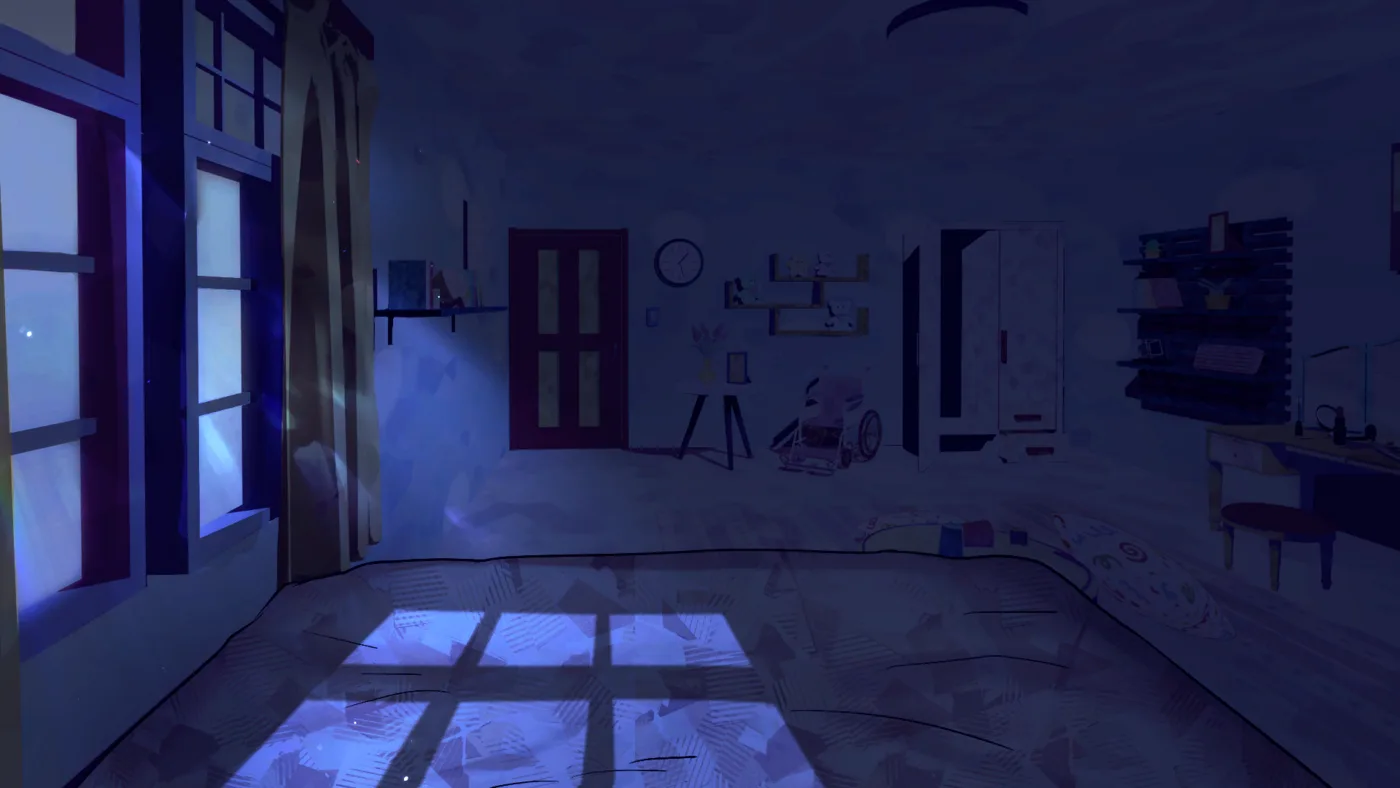
The evening of Day 2, and the second midnight
This is the hinge of the story, and it is easy to walk past. In Day2Evening, Adrian hands you the medication before bed. If wentOutside is still false, the scene first routes to #Trusting — the game checking whether you have already tried to leave. Then two answers, and they are not equivalent. "Take the medicine" gives adrianRelation +2 and routes to StoryGame/Day3_ED1, which leads to Ending 01. "(Pretend to swallow the pill and spit it out)" gives adrianRelation +1, sets spatPill to true, and routes to StoryGame/Midnight2, the second midnight, where the pill scene is revisited and the story turns. Note the small cruelty of the numbers: the dishonest answer is worth less approval than the honest one.
Day 3, and the fork
Day 3 opens on Day3_Act2, and it branches on a single flag. useKnife routes to StoryGame/Attack1, and the attack sequence runs through Attack2 into FinishHim. Take the other path and you land on StoryGame/ICanFixHim instead — the other name for the same encounter, chosen by you. From Attack4 the game falls into LockingDoor2, the escape, and that scene checks things in a fixed order: clickedLivingDoor goes to #Exit, hasKey goes to #KeyDoor, otherwise you fall into #ClickLoop, and secretRoomVisited opens #KeyDoorOpen and leads into StoryGame/PhoneOutside1, where the phone minigame and the call to Oliver happen. The last check decides your ending: toldAddress routes to StoryGame/Outside2, and without it the game goes to StoryGame/Outside1.
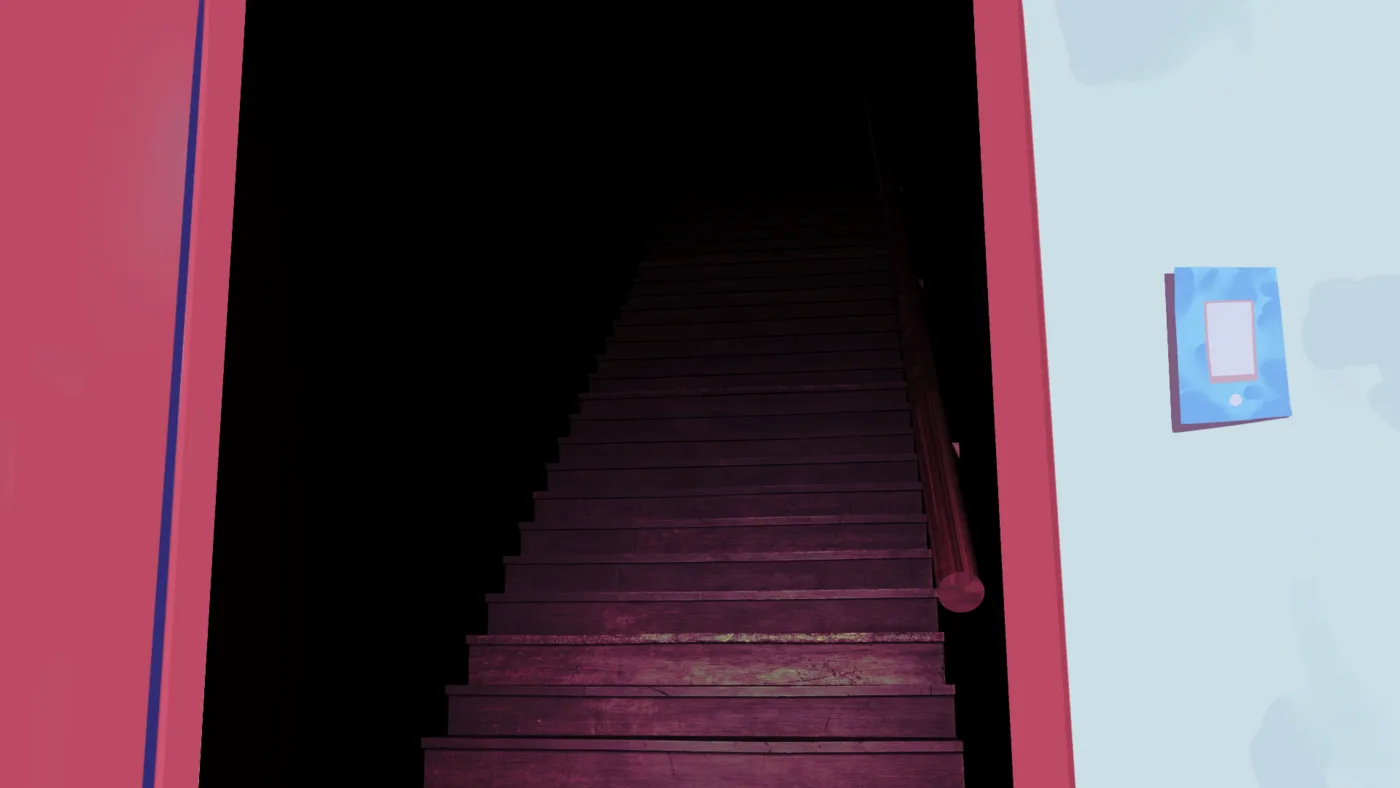
Outside, and the four endings
In Outside1 you meet Ian in the rain. Without toldAddress this is Ending 02, The cage: Ian says there is nowhere else that is safe except that house — exactly as Adrian told you — calls you a fool, and you go back inside with him. The escape that returns you to the cage.
In Outside2, with toldAddress set, you go further. If ianRelation is 40 or higher the game routes to StoryGame/IanRoute2 and then Police2, which is Ending 04, Moving Forward; below 40 it routes to StoryGame/Police1 and Ending 03, The Empty Cage. Both end in the same hospital room three months later, where Adrian is revealed to be a serial killer who kidnaps people and has them perform his dissections, the police raid the house and find nothing but bloodstains, and Adrian is still missing. In Ending 03 Ian is also missing with no known whereabouts. In Ending 04 he is in a psychiatric hospital nearby, where doctors sometimes let him use a mobile phone, and the two of you call each other from time to time while he tells you stories you listen to. Oliver visits you constantly. And in both, you catch a figure in the crowd and say nothing.
There is one more ending, and it comes from the opposite direction. If you never went outside and you took the medication, Day2Evening routes to Day3_ED1 and Ending 01, My boyfriend is the best: a newspaper reports that the Eastern Committee of Medical Associations publicly praised Dr. Adrian Winchester and gave him the Outstanding Physician for Innovation and Medical Diagnostics of the Year award, notes that the brilliant thirty-year-old physician is still a bachelor, and says Adrian declined to answer questions about his personal life because he only wants to focus on his work. The surface stays perfectly pleasant. The horror is that the story ends before the horror does.
The family photo
In Adrian's room there is a family picture with four smiling members. The boy in the middle is Adrian, but his hair is black.
That is the whole fact, and it is the only hard piece of evidence in the house. Everything else here is atmosphere, implication or the absence of a denial. This is a physical object with a detail in it that does not match the man living with you. The character sheet says Adrian is blonde and red-eyed. The photo says the boy has black hair. Both are true, and the game offers no bridge between them.
It is found inside the exploring sequence, on the #Photo branch, so it is easy to miss on a first run and sitting in plain sight on a replay.
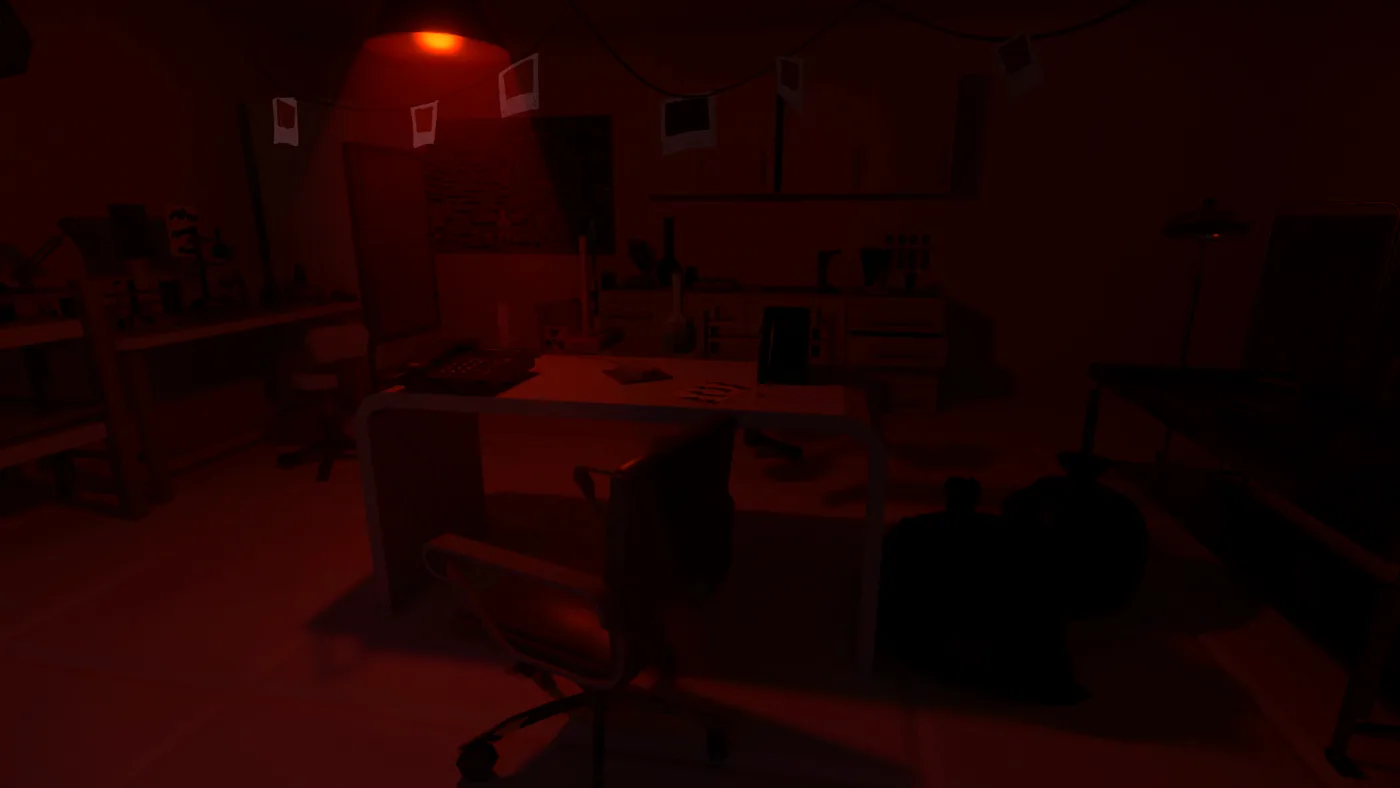
So here is what can honestly be said, and what cannot. You cannot say the boy is not Adrian, because the game says he is. You cannot say the boy is Ian, because the game describes Ian as brown-haired and the boy in the photo as black-haired, and never puts them in the same frame. You cannot say the photo is old, or recent, or retouched, or of a different family entirely. You cannot say the black hair means Adrian changed it, or that something was done to him.
What you can say is this: in a house where every surface has been curated — the palette, the flowers, the dolls, the smile — one photograph has been left in a room with a locked door, and it contains a single detail that does not match the man who owns it. That is either a slip in the fiction or a deliberate fracture, and the game will not tell you which. If you find a clean explanation for the black hair somewhere, be suspicious of it.
The newspaper and the parcel
The other two objects the game puts in front of you are softer, and both are about information you either do not finish reading or do not think to read properly.
The newspaper is in the living room, and its headline is about a recent murder case. You are interrupted before you finish reading it. The game gives you a one-line foothold on the outside world in a house that has made the outside world unnecessary, then takes it away mid-sentence. The interrupted reading is also a pacing tool: it makes you want to go back, which is how you end up in the room with the photograph.
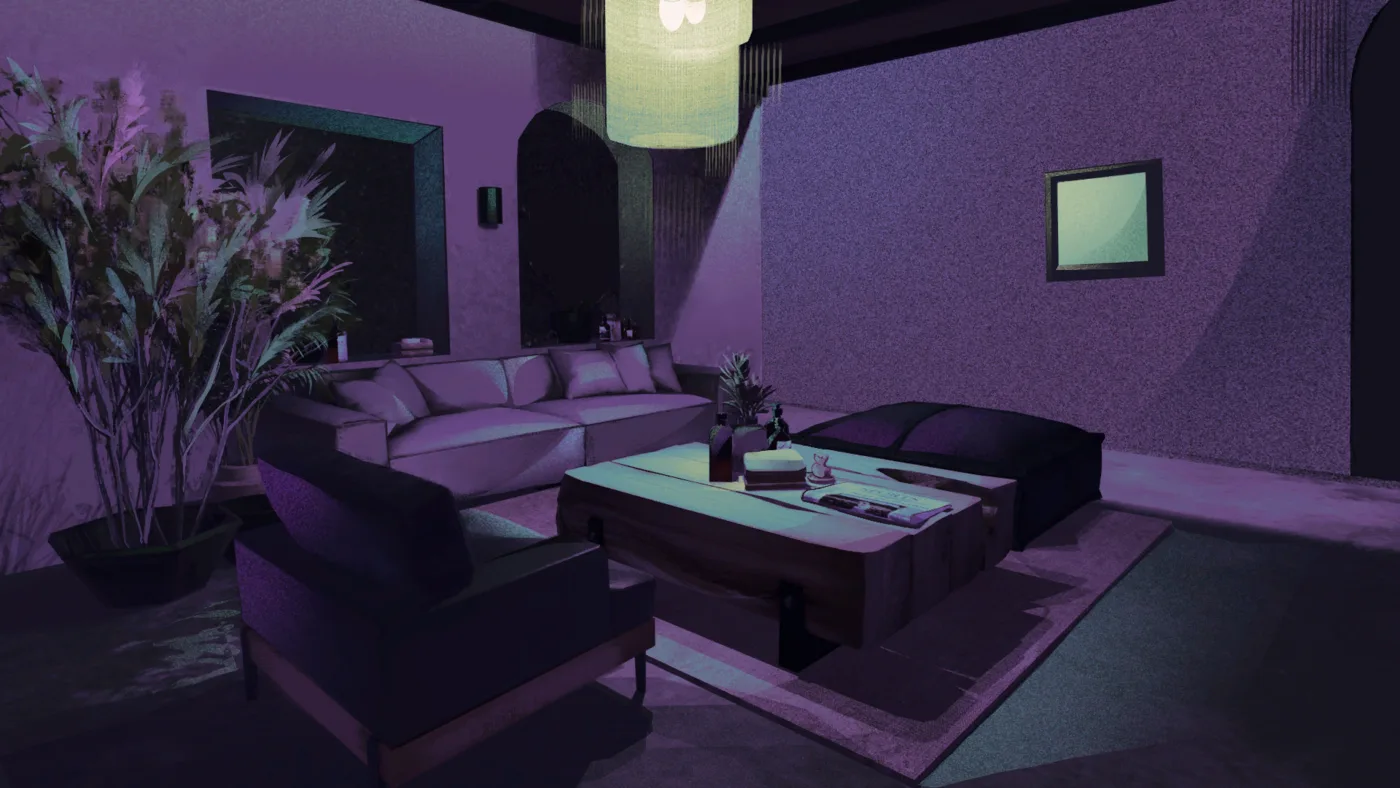
The parcel is the one that matters mechanically. Adrian brings it home, and the receiver address on it is the address of the house: 742 Silverwood Creek Lane, Silverwood Springs, CA 95401. It is also the address you give Ian when you set toldAddress, and it is the single most important detail in the game, because without it the escape door never opens. The branch that finds the parcel is #Parcel, and finding it sets sawParcel.
Read them together and the pattern is clear. The house is sealed not with a lock but with inconvenience. You cannot walk, so you cannot check the window. You cannot read the headline, so you cannot know the case. You would never think to look at the parcel, so the address never enters your head. Every barrier in this story is a small failure of attention, which is far more unpleasant than a locked door.
What the game leaves unanswered
Here is the honest list of things the game never resolves. Read it as a list of open questions rather than a list of mistakes, because these are the questions the writing is built to produce.
- What the pill actually is. It is offered twice, it can be swallowed or refused, and it is never named or explained.
tookPillandspatPillrecord the choice. Nothing records the consequence. - Why the boy in the family photo has black hair. The only hard contradiction in the house, left exactly where it was found.
- Who the other three people in the photograph are. Four smiling members, one boy in the middle, and no names for the rest.
- What the dolls are really for. Madison and Macaroni are the hint. The job is the disassembly. The game stops one step short of joining them.
- What the newspaper headline was about. A recent murder case, interrupted mid-read.
- What is down the basement stairs. You see the secret room and the stairs. The bottom of the stairs is never shown.
- Whether Adrian was ever caught. He is missing in every escape ending, and in Ending 01 he is winning an award.
- Who the figure in the crowd is. Both escape endings close the same way: you catch a figure and you say nothing.
- Whether Ian ever opens the flower shop. It is the one dream the story certifies as real, and the story stops before it happens.
That last one is worth a sentence of its own. The game goes out of its way to tell you the flower shop is not a lie, in a story where almost everything he says is. It then ends on maybe — maybe someday you will see each other again, maybe that day is the day Ian opens his flower shop. An ending that refuses to promise the one good thing it has told you is real is the most restrained thing in the whole script.
Frequently asked questions
Who is the man who holds the pill over you at midnight?
He is Ian, Adrian’s younger brother, and the game hides him behind the name ??? until the reveal. He first appears as a young man in a hospital-patterned shirt who pins you down in the dark and holds out a pill, saying Adrian never wanted him, that he is so weak he might drop dead any day, and that Adrian did not even see him as anything but a child.
What is the pill Ian is holding in front of your face?
The game never says what it is. Ian holds it out at the first midnight and the scene returns at the second one, and the script only records whether you swallowed it. The flag tookPill stores the choice, and no label ever explains what is inside the pill.
Is Adrian a serial killer?
Yes, but the game tells you that in the endings rather than in the story. Three months after the escape it is revealed that Adrian is a serial killer who kidnaps people and has them perform his dissections. He is missing, and the police raid the house and find nothing but bloodstains. Ending 01 says none of that. It reports Adrian winning an award for innovation and medical diagnostics, and notes that the brilliant thirty-year-old physician is still a bachelor.
Why does the boy in the family photo have black hair when Adrian is blond?
Nobody in the game explains it, and that is the point. In Adrian’s room there is a family photo with four smiling members, and the boy in the middle is Adrian, but his hair is black. It is the only hard piece of evidence in the house, and the game refuses to interpret it for you.
Who is Madison and why do the dolls matter?
Madison is an orphan Adrian talks about. She was abandoned at an orphanage at two and struggles to talk with the other children. She named the teddy bear Adrian made for her Macaroni and carries it everywhere. She is the emotional anchor of the doll job and the first hint that the dolls have a purpose beyond Adrian’s convenience. The disassembly minigame begins with a teddy bear on the table, almost certainly that same bear, though the game never says so outright.
What does Oliver Freeman actually do?
He is the voice on the phone and the man who rescues you at the worst moment. He introduces himself as Oliver Freeman speaking and asks who he is talking to. When Ian raises a syringe in the rain, Oliver is the one who stops it, having climbed over the fence just in time, and he says he is an officer of the law. He had been parked in the alley by Adrian’s house, patrolling day and night because he suspected Adrian. Without his call you never got out.
Can Ian be trusted?
Not fully, and the game does not pretend otherwise. In the Ian route he admits that it was all a lie and that he is no different from Adrian, and that he wanted to give the prey some hope, gain their trust, and then stab them in the back, because he was copying his brother the whole time. The one part of him that turns out not to be a lie is his dream of opening a flower shop.
What address do you need to give Ian, and where does it come from?
742 Silverwood Creek Lane, Silverwood Springs, CA 95401. It is the receiver address on the parcel Adrian brings home, and it is the address of the house itself. The same address is what you give Ian when you set toldAddress, and without that flag the game routes you to Outside1 and Ending 02, The cage, instead of Outside2.